What Two Couples on Fox Drive Show About Co-Buying in Inverness
November 19, 2026
What does a working household need to buy into Inverness in a year when a single bare lot in the area sold for $1,280,000?
At the bottom of a gravel driveway in Inverness Park, four friends flipped a coin to decide who would live in which of two identical new houses. Kristina Feldman and Ido Yoshimoto walked up the hill, and Jay and Taylor Palmer walked down. The Point Reyes Light told their story this month in a piece on shared ownership in West Marin. The coin flip makes a good scene. For a buyer comparing West Marin towns, the more useful part of the account is how the deal happened and what the other co-owners in the article said about leaving one.
In Inverness, pooling money with another household gets you to the table, but the money is the smaller part of it. A shared purchase here succeeds or fails on two points, and both depend on how small the market is. The first is the introduction that brings a property to you before the public sees it. The second is a plan for the day one partner wants out, because a fractional share is far harder to sell than a whole house.
Bay Area Real Estate Information Services, the regional MLS, tracks the area it calls Inverness as one reporting district. In August 2026 that district recorded three residential sales totaling $5,825,000, an average of $1,941,667, with homes averaging 46 days on market. It also recorded one lot sale, at $1,280,000 after an average of 125 days on market. In September 2026, the district again recorded three residential sales, this time totaling $5,000,000 for an average of $1,666,667, at an average of 89 days on market, and no lot sales.
For comparison, Mill Valley closed 20 homes in September 2026 at an average of 17 days on market. The Marin County median across all property types was $1,500,000 that month and $1,425,000 in August. Inverness looks quieter still beside its neighbors. In September 2026, Bolinas, Marshall, Nicasio, Olema and Point Reyes recorded no sales at all. In August, Bolinas closed two homes at an average of $3,367,000.
With three sales a month, a single result can move the average by hundreds of thousands of dollars. It also means a buyer is choosing from a handful of houses, and the right one may never reach the MLS. We covered how this thinness slows sales across the region in our post on why West Marin homes take longer to sell. Average days on market of 46 to 125 suggests sellers who are willing to wait for the right buyer. Some of those sellers end up choosing a buyer they already know.
According to the Light, Feldman and Yoshimoto spent three years looking for a home in West Marin and kept losing to buyers with more money who paid all cash. The Palmers were renting in Inverness and couldn't buy either. The two couples made a joint offer on a house in Mendocino. That one went to a tech buyer who paid cash over the asking price.
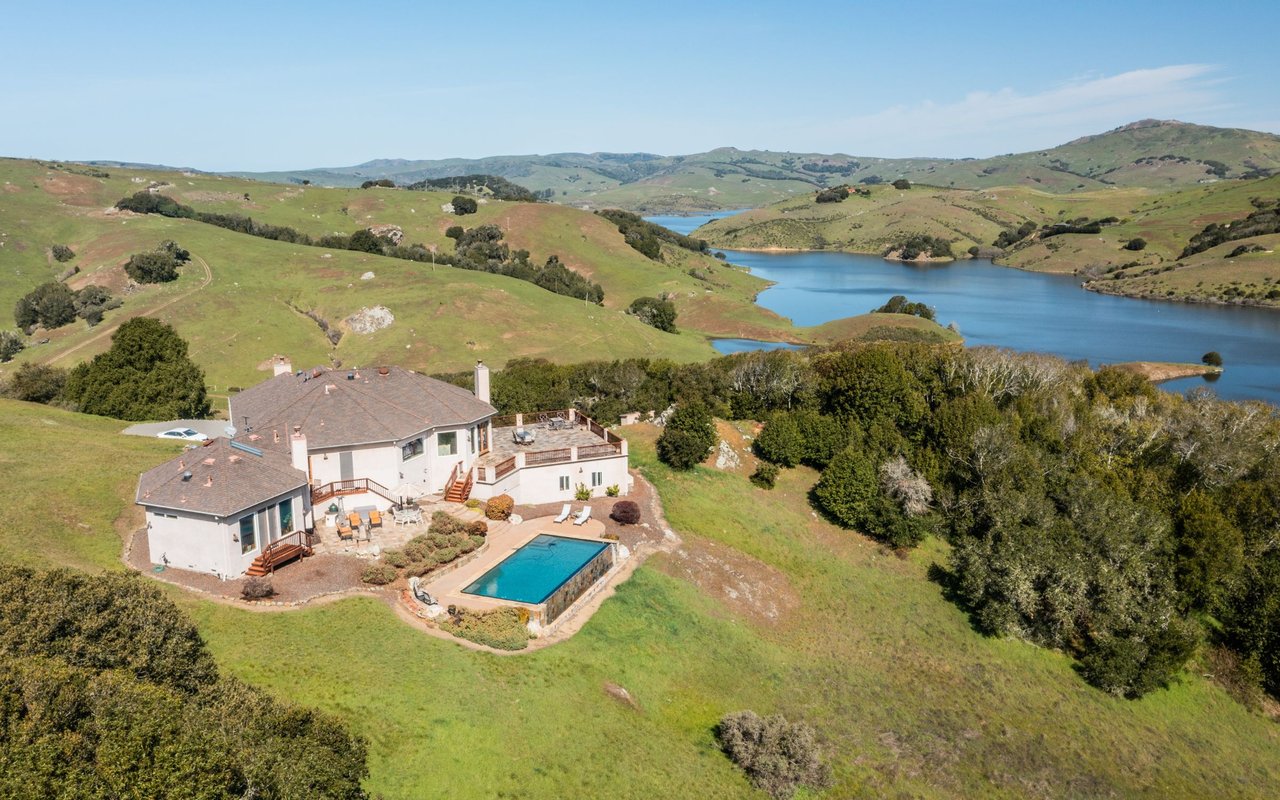
The opening came on a walk. Jay Palmer's neighbor mentioned that he wanted to sell his Fox Drive property off market to someone in the community. The four pooled their savings and made an all-cash offer $100,000 under the asking price, and the seller accepted.
Their combined savings put the four on equal footing with the all-cash buyers who had beaten them before, but only because a neighbor had already decided to sell to someone local. A seller in a three-sale-a-month market who wants the property to go to someone local can make that happen, and a buyer who isn't already part of the community never hears about the property. Both couples were already living in the area or connected to it, and that connection did as much for them as their combined savings.
The couples divided the roughly three-acre lot in two and drew one set of plans for both houses. They acted as their own builder, with no general contractor. Feldman handled the county paperwork, and Palmer, a firefighter, worked with the fire department. Marin County approved the project in under a year, faster than they had expected. PG&E was the long wait. The Light reports the couples sat in the utility's connection queue for about two and a half years. Feldman moved into her house in August 2025.
Land for a project like this one is scarce. "A lot of the easy lots have been built on in West Marin," Marin County Fire Marshal Scott Alber told the Light. The same article cites county Community Development Agency figures showing that more than half of West Marin properties are second homes and 11 percent of residential properties are short-term vacation rentals.
Taken together, these figures explain the $1,280,000 lot in the August BAREIS report. Buildable lots are scarce, and much of the existing housing belongs to owners who don't live here full time. Two households pooling savings can reach a price neither could manage alone, though the wait for a utility connection stays just as long.
The Light also spoke with a longtime Inverness co-owner whose group of three cottages has been shared since 1989. When one owner later wanted to sell, the co-owner described the problem in market terms. "The value of the property had appreciated so enormously that a buyout was very expensive," she said. An outside buyer was hard to find as well. "No third party is going to buy into a co-ownership arrangement where they may or may not even know the people, when they can take that same amount of money and probably buy a house just on their own," she told the Light.
The rising prices that make co-buying necessary also make it harder to leave. As values climb, the remaining partners need more money to buy out the one who is leaving. And because Inverness has so few sales, the pool of outside buyers is small to begin with, and a share in a property held with people they don't know asks something extra of them. "It works, I'm a living example that it works, but it's not like owning your own standalone property," the same co-owner said.
Daniel Cordrey is a contractor who co-owns on Laurel Street in Inverness Park. He told the Light that "the true core of a T.I.C. is the interpersonal relationship between the partners." He and his partner bought as a permanent home with no intention to sell, and he said that shared understanding built a lot of trust from the start. When the partners agree from the start that they are staying, the hard question of how one of them leaves is far less likely to come up.
Cordrey's group had help in 2006. The Community Land Trust Association of West Marin, known as CLAM, used its standing in the community to hold the Laurel Street parcel in escrow while the partners arranged financing. Cordrey now sits on CLAM's board. Jarrod Russell, CLAM's executive director, told the Light that tenancies in common are "one tool in the toolkit." He suggested CLAM could one day own the land under a co-owned property, with a deed restriction that keeps the homes affordable after the original owners are gone.
For now, Russell said, CLAM is "pretty maxed" responding to the displacement of some 40 ranch families. CLAM's September 2026 newsletter describes 11 properties supporting families displaced from the Seashore and Martinelli ranches, and it marked the July 8 opening of 14 homes at Sixth and B Street in Point Reyes Station. The Point Reyes Light reported that those homes are interim housing while CLAM works toward permanent affordability. In Inverness, CLAM has taken a lease with an option to purchase on The Cottages, the 20-cottage former hotel property on more than 15 acres, for interim housing for displaced families. CLAM also runs a West Marin Community Rentals Program that helps homeowners rent out existing units or create housing such as ADUs.
So in fall 2026, a group of co-buyers shouldn't count on the kind of escrow hold that helped on Laurel Street. The land trust has committed its capacity elsewhere for now, and that leaves co-buyers to find the introduction and plan the exit themselves.
How often does anything sell in Inverness? Rarely. BAREIS recorded three residential sales in the Inverness district in each of August and September 2026, plus one lot sale in August. A search for something a group can split, such as a large lot or a property with more than one cottage, will have even fewer options.
Does buying land and building save time? For the Fox Drive couples, county approval took under a year, and the PG&E connection took about two and a half years. Build that wait into your plans.
What did the co-owners in the Light's story emphasize? Cordrey pointed to the relationship between partners and a shared intention to stay. The longtime cottage co-owner's account shows how much a buyout can cost once values have risen.
The Fox Drive lot went to two couples because its seller wanted it to go to someone in the community. If you are weighing a purchase in Inverness with family or friends, B.G. Bates would be glad to talk through what this small market has been doing and what your group is hoping to find. Begin your West Marin story by reaching out directly.
B.G. is dedicated to her community and continues to be a known resource with a unique and knowledgeable perspective on all aspects of West Marin.